
Egyptian Streetwear Brand
How an Egyptian Streetwear Brand Went From EGP 1M to EGP 10M a Month on Meta Ads
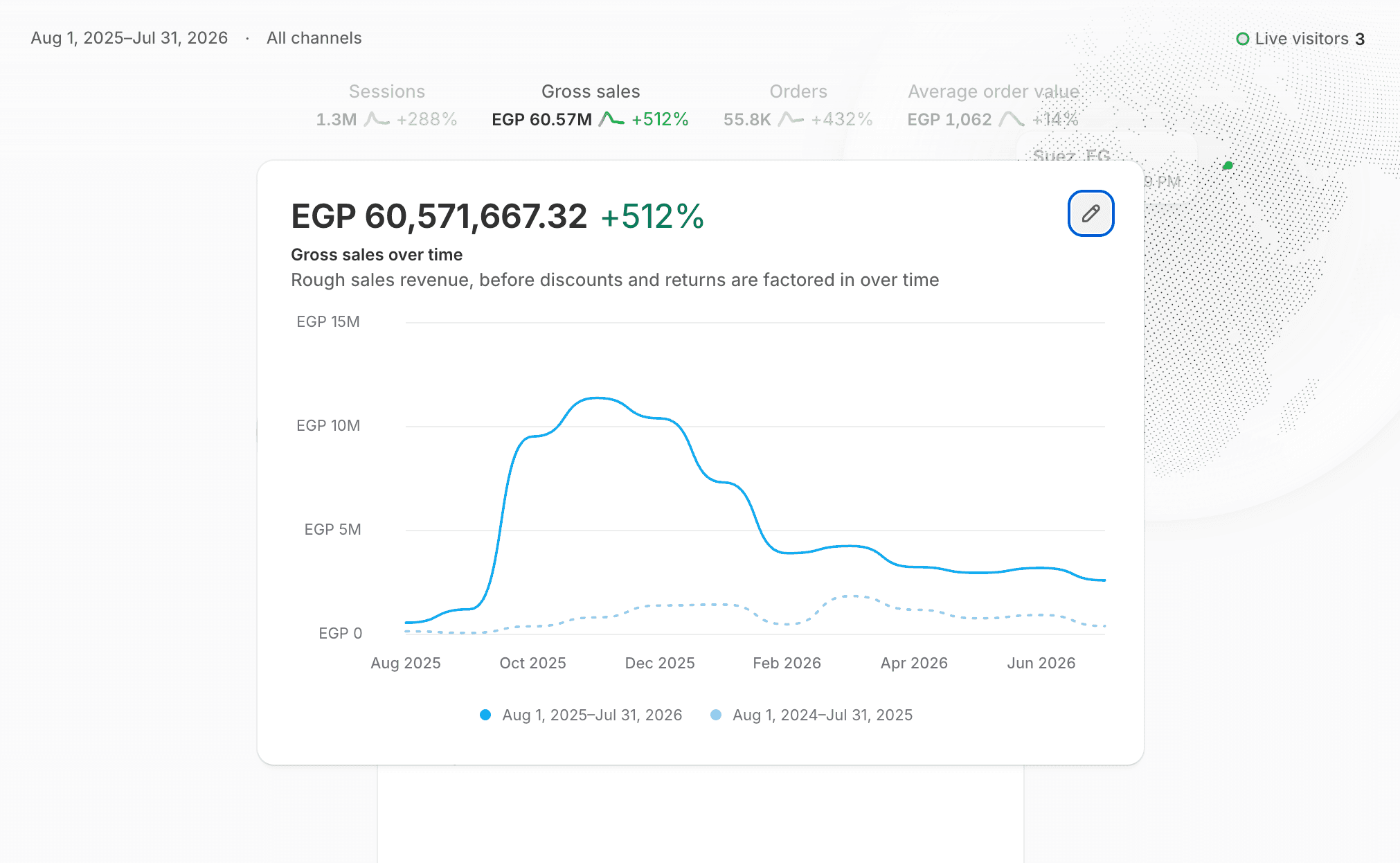
A small Egyptian hoodie and streetwear brand was doing around EGP 1M a month in September 2025. By November it was doing over EGP 10M a month, and the twelve months to July 2026 closed at EGP 60.57M in gross sales — up 512% year on year on 55.8K orders, at 12.2x purchase ROAS through the scale window. Meta Ads was the only acquisition channel running, and no new creative was produced to get there. What changed was how the account was built.
- Period
- Aug 1, 2025 – Jul 31, 2026
- Market & channels
- Egypt · Shopify · Meta Ads only
The challenge
This is a seasonal brand with a short window. Hoodies sell in Egypt for roughly four months, and a brand this size gets one shot at that season — miss it and the year is gone. The account already had creative that worked and an audience that bought; sales had been flat around EGP 300K–1M a month for most of the preceding year. The constraint was not demand and it was not creative. It was that everything ran through a handful of broad campaigns competing with each other for the same impressions, so adding budget made the auction more expensive instead of making the brand bigger.
The strategy
Start at the top of the season, with a different offer
The scale-up launched in early October, at the front edge of the Egyptian winter rather than in the middle of it, so the account had time to learn while demand was still building. It launched behind a bundle offer instead of the flat percentage discount the category defaults to — buy two and save, buy three and get free shipping, buy five for the deepest tier. A bundle offer does something a flat discount cannot: it raises the value of every order it wins rather than lowering it. Average order value ended the period up 14%, which is the opposite of what usually happens when a fashion brand scales into a season on discounting.
Split the account by product category, not by audience
Instead of one catch-all campaign holding every product, the account was split into category campaigns — round-neck, regular tee, oversized tee, hoodie — each on a broad audience with its own budget. This is the piece most accounts get backwards: they split by audience and put every product in each one, which trains the algorithm on a muddled signal and forces the campaigns to fight for the same people. Splitting by category gives each campaign a clean conversion signal to optimise against, and lets the winners take budget on their own merit. Two of these category campaigns ended the year carrying most of the account, at 11.7x and 11.4x purchase ROAS across twelve months.
Structure the campaigns to stop competing
Once budget starts moving, the risk is that the campaigns bid against each other and the brand pays a premium to reach people it was already reaching. Campaigns were separated deliberately — by category, by exclusion, and by the audience they were allowed to touch — so that lifting the budget on a winner did not quietly raise the cost of every other campaign in the account. That is the difference between spend going up and results going up with it: across the four-month scale window the flagship category campaign held 12.2x purchase ROAS while its budget multiplied, and the blended account return across the full twelve months was 10.8x.
Four to five ads per campaign — same creative, different angle
No new creative was commissioned for the scale-up. Each category campaign ran four to five ads built from the assets that already existed, varied on the three things that actually change who responds: the offer tier (free shipping, buy-three, buy-five), the language (Arabic and English run separately, because they are different buyers in Egypt), and the format (carousel against single image, so multi-product browsing and single-product intent each get the ad that suits them). Small changes, but they mean a campaign reaches five distinct personas instead of showing one person the same ad five times.
What the structure becomes after the season
The season ended, as seasons do — winter sales peaked in November and came down through spring. What did not come down was efficiency. March through May ran at 12.8x, 12.3x and 13.0x purchase ROAS on a fraction of the winter budget, because the category structure built for the peak keeps working once the peak is over: the campaigns are still clean, still separated, still optimising on their own signal. That is what makes it evergreen rather than a one-season spike — the brand came out of the season with an account it could keep running, not one it had to rebuild.
The result
Figures below are read directly from the store's own analytics dashboard for the period shown in the screenshot.
- Gross sales
- EGP 60.57M
- +512%
- Orders
- 55.8K
- +432%
- Peak month
- EGP 10M+
- Nov 2025
- Purchase ROAS
- 12.2x
- scale window
- Average order value
- EGP 1,062
- +14%
Key takeaway
Monthly sales went from about EGP 1M to over EGP 10M in two months, and the year closed at EGP 60.57M gross sales — up 512% — on 55.8K orders, at 12.2x purchase ROAS through the scale window and 10.8x blended across all twelve months. The part worth taking away is what did not change: no new creative was shot, no new product was launched, no new channel was added. The account was rebuilt around product category instead of audience, campaigns were separated so they stopped bidding against each other, a bundle offer replaced the flat discount so scale raised order value instead of eroding it, and each campaign ran four to five variants of existing creative to reach different personas. You are not always short of creative. Often you are short of a structure that lets the creative you already have earn what it is worth.