
Mostafa Taher E-commerce Media Buyer
Google Ads for E-commerce
Google Ads for e-commerce is about capturing demand that already exists rather than creating it. Someone typing a product name into Google has already decided they want the thing; the job is to be there, with the right price and the right landing page, at a cost the margin can carry. That makes the product feed as important as the campaigns — Shopping and Performance Max both bid off the data in Merchant Center, so titles, images, prices and availability quietly determine which searches an account is even eligible for. Performance Max adds reach across Search, Shopping, YouTube and Display from a single campaign, which is powerful and also opaque: without asset-group discipline and exclusions it will happily spend the budget on the cheapest inventory it can find. Read alongside Meta rather than separately, Google also shows where budget is being spent twice on the same customer, because paid social is usually what sent them searching in the first place.
The product feed is the campaign
Shopping and Performance Max do not bid on keywords you choose — they bid on what Merchant Center knows about your products. That makes the feed the highest-leverage surface in the account, and the one most often left at whatever the store platform exported by default.
- Titles carry the search terms — a title that reads like a shelf label, with brand, product type and the attribute people actually search on, is eligible for far more queries than an internal SKU name
- Disapprovals and missing GTINs silently remove products from the auction entirely, so feed health is a weekly check, not a setup task
- Price and availability are competitive signals, not just data — Shopping puts your price next to everyone else's on the same screen
Performance Max, without handing over the account
Performance Max reaches Search, Shopping, YouTube and Display from one campaign, and reports back as a single number. Left alone it will find the cheapest inventory available, which is rarely the inventory that converts. Keeping it useful means splitting asset groups so performance is readable per product category rather than averaged into one line, excluding placements and audiences that spend without converting, and feeding it accurate conversion values so it optimises toward margin rather than order count. It is a powerful campaign type that punishes a hands-off setup.
Read Google and Meta as one budget
The two platforms reach overlapping demand. Meta typically creates the demand; Google captures it once the person starts searching. Judged separately, Google looks efficient and Meta looks expensive — because Meta paid to create the customer that Google then closed. Reading them together is what stops budget being counted twice and shows which channel is actually generating incremental orders rather than intercepting them. The MoreShopping case study on this site ran both platforms together for exactly this reason.
Sources: Google Ads, Google Merchant Center
Proof
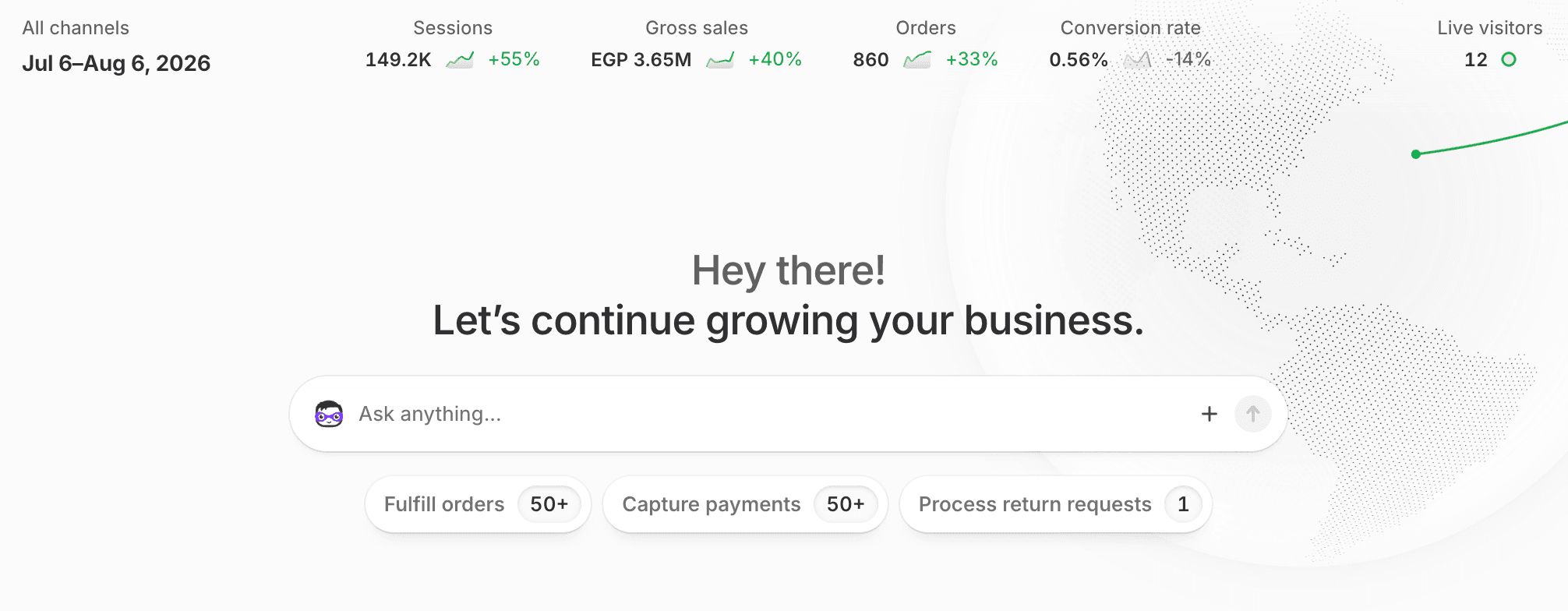
MoreShopping · Jul 6 – Aug 6, 2026
+40% gross sales
Egyptian electronics e-commerce. Grew gross sales 40% to EGP 3.65M in a single month across Google Ads and Meta Ads, on 860 orders and 55% more traffic.
Read the full case studyCommon questions
Do I need Google Ads if Meta is already working?
Only if there is search demand to capture. If people are already typing your brand or product category into Google, that demand is being handed to whoever is bidding on it. If nobody is searching for what you sell yet, Meta is where the demand gets created first.
Is Performance Max worth running for a small catalogue?
It can be, but a small catalogue gives the algorithm less to work with, and a single asset group averaging a handful of products hides more than it shows. With a short product list, standard Shopping and Search often stay more readable and more controllable.